
Post Construction Cleaning Rates: Cost Factors
Post construction cleaning rates are not a posted price list. Two buildings with the same square footage can take very different hours once dust, glass, floors, access, and the deadline are on the table. Golden Coast Cleaning Services does not publish a rate card. A walkthrough is how a facility manager, property manager, or general contractor gets a number that matches the site.
Want a number for this building, not a generic rate? Schedule a walkthrough and we will price the site in front of us.
This guide covers the project factors that move the quote. It does not replace the step-by-step process on the construction cleaning page. Use that page for what the clean includes. Use this one to see why one bid is higher than another before you book the work.
What post construction cleaning rates actually cover
A post-construction clean is a project, not a routine janitorial visit. After a build or renovation, the space still holds drywall dust, packaging, adhesive, paint film, and stickers. The goal is a space that is safe to walk and ready for occupancy, not a quick wipe before the next shift.
Golden Coast scopes this work as a project. The published process starts with rough debris and packaging removal. It then moves to HEPA vacuuming of walls, ceilings, vents, shelving, and fixtures, because fine dust resettles if it is only wiped. Surfaces get a material-appropriate wipe. Adhesive, paint, and caulk residue get targeted attention. Glass loses film, tape, and overspray. Hard floors are scrubbed and mopped, and carpet is cleaned when it is part of the job. Fixtures are detailed, and the visit ends with a room-by-room walkthrough against the punch list.
That sequence is the scope. It is not a promise of a fixed number of visits or a guaranteed finish time. Hauling volume, floor finishing, and unusual residues belong in the quote. If those items are missing from one bid and present in another, the rates are not comparable.
Industry guides often split the work into phases. A rough clean removes bulk debris after major work and before finishes. A final or detail clean is the thorough pass after finishes are in. A touch-up covers fingerprints and last dust before handover. Each phase is lighter or heavier than the others. Quoting only the final clean, then expecting the crew to haul debris too, is how a number falls apart on site. Name the phase in the request so every bidder prices the same job.
Square footage and layout
Square footage is the starting point, not the whole rate. A wide open warehouse floor and a medical suite with the same area do not take the same time. Rooms, restrooms, built-in casework, and long runs of baseboard add edges. Edges are where dust and residue sit, and edges are slow.
Layout complexity shows up in a few places a floor plan does not always make obvious:
How many rooms, corridors, and restrooms the crew must reset between.
Ceiling height and the amount of horizontal surface above eye level.
Built-ins, lab benches, or retail fixtures that must be detailed by hand.
Whether the clean stops at the interior or also includes entries and exterior glass.
Ask each bidder to price the same measured area and the same list of rooms. A lower number that quietly drops the restrooms, the lobby glass, or a mezzanine is not a lower rate. It is a smaller job. Golden Coast builds the plan around the building, so the walkthrough is where those rooms get named.
Also separate the one-time construction clean from the recurring janitorial plan that starts after occupancy. Golden Coast offers daily, weekly, or monthly schedules, from one to seven days a week, once the building is in use. That ongoing program is a different quote. Mixing it into the construction number makes both harder to read.
Dust level and leftover debris
Dust level is the factor that most often doubles the hours. A site that the trades already swept is a different job from a site coated in fine drywall dust. With stickers on the glass and paint on the sills. Drywall and concrete dust is light. It travels through vents and settles again after a wipe. That is why the Golden Coast process uses HEPA vacuuming on walls, ceilings, light fixtures, vents, and shelves before the detail wipe.
Debris volume matters too. Packaging, drywall scraps, and wood offcuts have to leave the building before detail work can start. If the general contractor has already hauled that waste, the cleaning rate should reflect a lighter rough phase. If the crew is expected to bag and remove it, say so. Hauling is labor, and it is not assumed.
Fine dust is also an indoor air problem, not only a visual one. The EPA's indoor air quality guidance says source control, ventilation, and filtration reduce exposure to indoor pollutants. A dry broom on construction dust does the opposite. It sends fine particles back into the air. Golden Coast uses HEPA vacuuming before the detail wipe so the dust is captured. The cleaning crew still needs heavy cutting to be finished before they arrive. They are not a substitute for the contractor's dust controls during the build.
On the walkthrough, describe the dust in plain terms. Light and already swept, typical build dust, or heavy drywall dust with film and stickers. That one note does more for an honest rate than a square-foot figure alone.
Windows, glass, and sticky residue
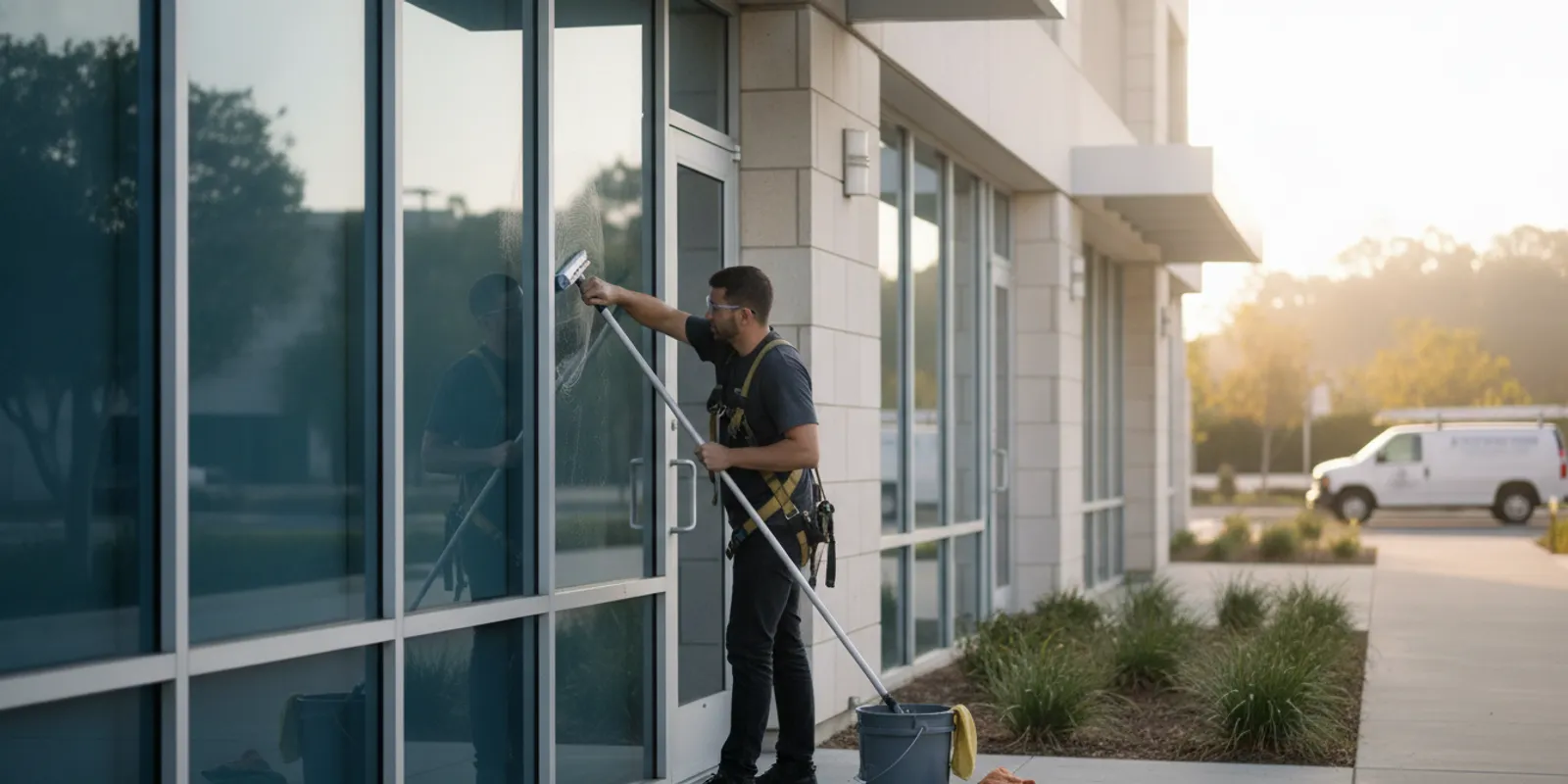
Glass is slow work, and construction makes it slower. New installations often carry protective film, painter's tape, sticker residue, paint overspray, and concrete splatter. Each pane is hand work. A building with a glass storefront and interior partitions can spend as much labor on glass as on floors.
Count the glass before you compare bids. Note interior versus exterior, floor level, and whether high glass needs a pole or other access. Golden Coast's construction scope includes interior and exterior window cleaning with methods that are safe for new glass. Tracks, sills, and frames are part of a careful glass clean. Screens and heavy mineral deposits should be called out if they apply.
Do not treat this article as a window-washing price guide. Routine commercial window washing, and the factors that shape that separate service, live on the window washing page. Here, glass is one input to the construction rate: how much of it there is, how dirty the film is, and how the crew can reach it.
Adhesive, caulk, and paint overspray on frames and sills belong in the same conversation. A light fingerprint wipe is not the same task as lifting construction film. If one quote says "windows" and another lists film, tape, and overspray, you are looking at two scopes.
Floors change the hours
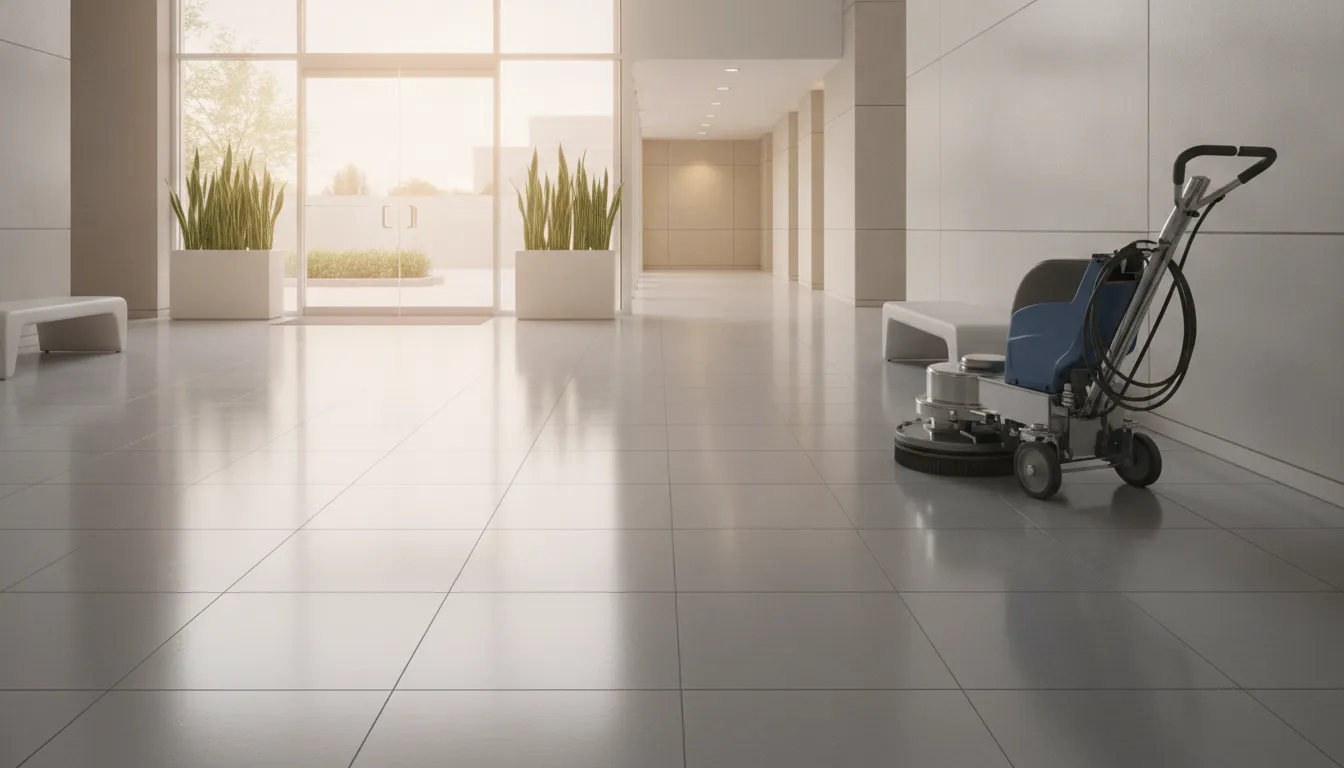
Floors are the other large variable. Construction dust, grout haze, and adhesive do not come off every surface the same way. The Golden Coast construction page describes hard floors as vacuumed, scrubbed, and mopped. With new VCT or tile cleaned and prepared for a first finish coat when that preparation is in scope. Carpet is vacuumed and cleaned if it is part of the area.
Match the method to the material. The company's floor-care work includes VCT and resilient tile that may need stripping and finish, tile and grout, concrete, hardwood or laminate, and epoxy. Epoxy recoating and hardwood conditioning are surface-specific. They are not included in every construction clean. A first finish coat on new VCT is floor-care work. Price it as its own line if you need it, rather than hoping it is buried in a flat cleaning rate.
Read the commercial floor care page when the building needs strip, wax, scrub, or a finish schedule after the dust is gone. That page is the right place for ongoing floor maintenance. This article only needs you to name the floor type so the construction quote can include the right first clean.
Carpet deserves the same honesty. A vacuum pass is not hot-water extraction. If the space has new carpet with drywall dust in the fibers, say whether you want a vacuum only or a deeper clean. Golden Coast treats carpet cleaning as its own service, with low-moisture encapsulation or hot-water extraction chosen for the soil. Put that choice in the scope.
Access, readiness, and the schedule
A building that is not ready costs more, even when the square footage stays the same. Power and water need to be on. Other trades still on site mean the crew stops, moves, and often comes back. A locked electrical room, a missing elevator, or a loading dock that closes at 3 p.m. all change the hours.
Golden Coast's terms expect accurate location, access, and scope details, plus a safe place to work. Service can be refused when conditions are unsafe. Changed conditions or added work can change the price, because the quote is based on what was disclosed. That is a protection for both sides. It only works if the walkthrough notes match the site the crew will actually find.
Schedule pressure is its own line. A handover next week is not the same job as a handover tomorrow morning before a tenant walk. After-hours and overnight work fit this company. Cleaning is offered any time of day or night, Pacific time, and Jennifer Cho, the owner, stays reachable for schedule changes. Faster still means more people on site or a tighter sequence, and the rate should say so.
Occupancy plans matter too. A vacant suite can be cleaned in a straight pass. A building where staff are already moving in needs protection of furniture, a phased floor plan, and more communication. Golden Coast was built for that kind of change. The company started when a property manager needed a janitorial partner who could adjust the schedule quickly. And the owner still talks with clients directly by text, phone, or email.
How the factors compare
Use one sheet for every bidder. The point is not to invent a dollar figure. Golden Coast does not publish post construction cleaning rates, and a borrowed price from another company would not describe this building. The point is to see which factor is doing the work in the quote.
Factor | What raises the effort | What to write in the scope |
Size and layout. | Many rooms, high ceilings, built-ins, and restrooms. | Measured area and the room list. |
Dust and debris. | Heavy drywall dust, with scraps still on site. | Dust level, and who hauls the waste. |
Glass. | Film, tape, overspray, and high or exterior panes. | Pane count, interior or exterior, and access. |
Floors. | Grout haze, adhesive, a first VCT finish, or dusty carpet. | Floor type, and whether finish or extraction is included. |
Access. | No power or water, trades still working, or limited dock hours. | Ready date, hours, and areas that are off limits. |
Schedule. | A next-day handover or an occupied move-in. | Deadline, and whether the work is after hours. |
When you read the bids, line them up against that sheet. A rate that looks low and skips glass film or floor finish is not the better buy. A rate that lists the phase, the dust, the floors, and the deadline is the one you can hold the crew to.
What to bring to the walkthrough
Golden Coast asks for a walkthrough because the rate has to follow the building. Jennifer builds the cleaning plan around what the site needs, and clients work with her directly rather than being handed to a field manager. Come ready to walk the space, including rooms that are easy to forget.
Bring these items:
The measured square footage and a room list, including restrooms, entries, and any mezzanine.
The phase you need: rough clean, final detail, touch-up, or a named combination.
An honest note on dust and on whether bulk debris is already gone.
Floor types, plus any first finish coat or carpet cleaning you want priced separately.
A glass count, with interior, exterior, and hard-to-reach panes marked.
The handover date, allowed hours, and whether other trades will still be working.
Any plan for recurring janitorial after move-in, kept as its own conversation.
Move-in cleaning for a vacated office is a related but different service. If the job is lease turnover rather than construction dust, start from the move-in and move-out cleaning page. Construction adhesive, grout haze, and drywall dust are not the same soil as everyday occupancy film.
If you want a single partner after the keys are turned, say that too. Office cleaning, floor care, and window washing can be planned once the construction clean is done. Keeping that recurring work out of the construction number makes the project rate easier to compare.
Ready to price the building in front of you? Schedule a walkthrough and we will match the scope to the site.
Frequently asked questions
Do you publish post construction cleaning rates?
No. Golden Coast does not post dollar rates or a per-square-foot price. The quote follows the building's size, dust, glass, floors, access, and deadline. A walkthrough is what turns those factors into a number.
Why can two buildings of the same size cost different amounts?
Square footage ignores the slow work. Heavy drywall dust, glass film, grout haze, a first floor finish, and a site that is not ready all add hours. A simple open floor with the debris already hauled is the lighter job.
Does the construction price include floor wax or carpet extraction?
Not automatically. Hard-floor washing is part of the construction clean. Strip and wax, a first VCT finish coat, and carpet extraction are separate services. Name them if you want them in the quote.
What if the site is not finished when the crew arrives?
Power, water, and a clear work area need to be ready. Other trades still working, or a change in the debris, can change the price. The quote is based on the conditions you disclose at the walkthrough.
Can the clean happen after hours before a morning handover?
Yes. Cleaning is available day or night, and the schedule is set around the handover. A tight deadline should be in the request so the crew size and hours are part of the rate.
Schedule a walkthrough
If you are pricing a post-construction clean in Orange County, Irvine, Huntington Beach, or the surrounding cities, walk the site before you compare numbers. Golden Coast Cleaning Services will look at the dust, the glass, the floors, and the deadline, then build a scope that matches the building.
Schedule a walkthrough by calling (650) 483-8837 or through the contact form. Leads go to the owner, and you will get a direct follow-up.

Comments