
A Facility Manager's Guide to Best Commercial Cleaning Services Orange County
Choosing among the best commercial cleaning services in Orange County starts with defining what your building needs. An office manager's checklist can turn a vague request into a practical discussion of rooms, tasks, timing, access, and follow-up. It also gives each provider the same starting point, so you can compare the proposed work rather than broad promises.
What should an office cleaning checklist include?
Begin with a room list, floor plan, or simple sketch. Include reception, private offices, open work areas, meeting rooms, kitchens or break rooms, restrooms, corridors, entrances, storage areas, and shared tenant spaces. Mark rooms that are excluded or have restricted access. This prevents a common planning gap: a proposal may refer to “the office” without making clear which rooms that phrase covers.
For every space, note its use, the people who use it, the periods of highest activity, and the finish or feature that needs attention. Record whether the floor is carpet, resilient flooring, tile, or another surface. Note glass partitions, high-touch shared surfaces, equipment that must remain undisturbed, and any furniture that should not be moved. These are planning details, not assumptions that every item is part of standard recurring service.
- Reception and entrances:
Identify floors, entry glass, mats, visible debris, and areas that receive frequent foot traffic.
- Workstations:
State which shared surfaces may be cleaned and which papers, devices, personal items, or desk areas must be left untouched.
- Meeting rooms:
List tables, chairs, floors, glass, and any reset tasks required before the next workday.
- Restrooms:
Specify fixtures, floors, mirrors, touchpoints, and whether supply replenishment is requested.
- Break areas:
Clarify counters, sinks, tables, floors, and the boundaries around appliances or food left behind.
- Shared corridors:
Mark tenant boundaries, floor types, access windows, and any areas needing an escort.
Write each item as an observable task and expected result. “Address visible floor debris in the conference room on scheduled visits” is clearer than “keep the room clean.” For a surface, say what can be wiped and what must not be disturbed. A checklist should help prevent misunderstandings, not authorize cleaners to handle sensitive records, devices, or materials without an agreed process.
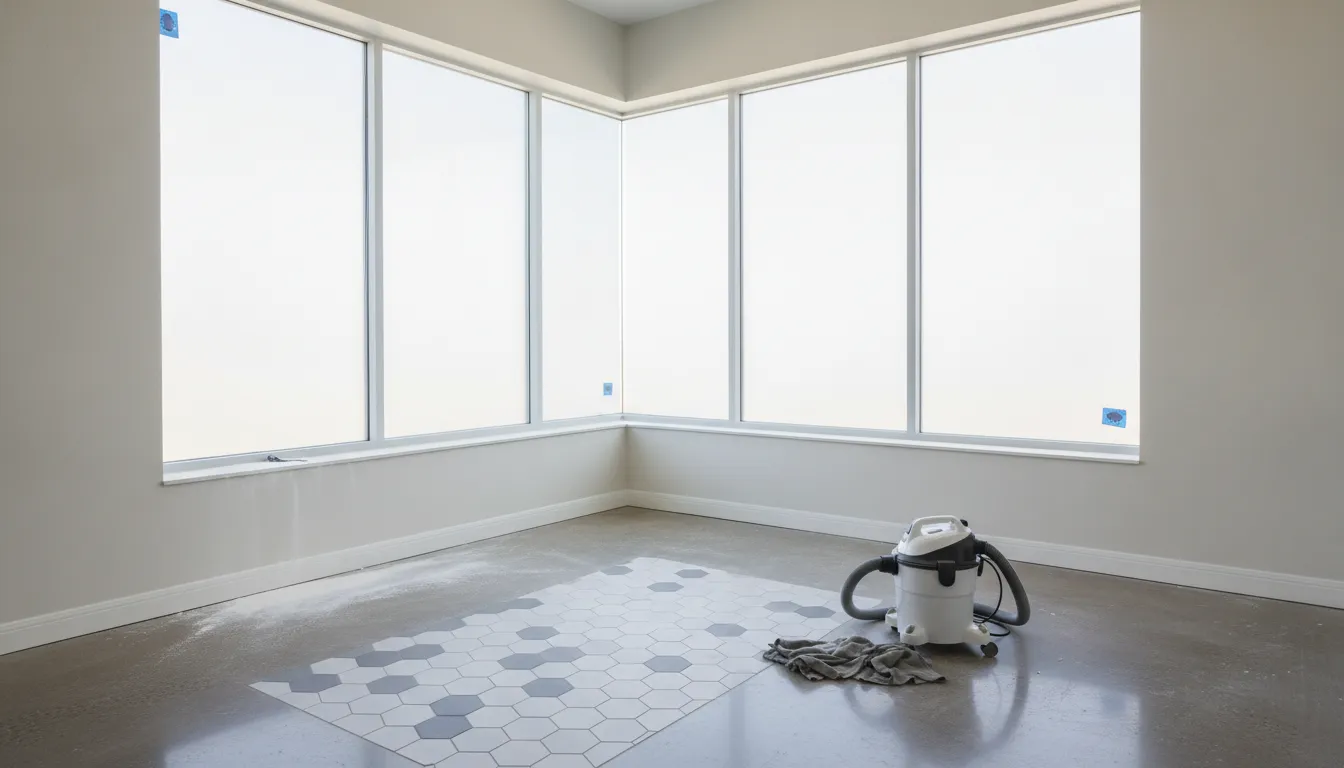
Separate tasks into routine, periodic, and project-based work. Routine tasks are the items expected on each scheduled visit. Periodic tasks might include detailed floor care, carpet cleaning, or window washing on an agreed cycle. Move-in or move-out work and construction cleanup are distinct projects, not automatic additions to an occupied-office checklist. Labeling the categories makes it easier to see what is included, what is optional, and what would need a separate discussion.
How do you choose a useful cleaning frequency?
There is no single schedule that fits every office. Start with occupancy, traffic, operating hours, and the condition the organization wants to maintain. A busy entrance, a frequently used restroom, and a low-use storage room have different patterns. The plan should reflect actual site use and the provider's proposed scope rather than a generic frequency copied from another building.
Use a simple three-part schedule while preparing for a walkthrough:
- Every scheduled visit:
Put recurring tasks here, such as agreed care for common areas, restrooms, or high-traffic floors.
- Periodic:
Record tasks that may be needed on a cycle, and leave the interval open for discussion if you do not yet know what is appropriate.
- Project-based:
List one-time or change-driven needs, such as a turnover or post-construction cleanup, separately from recurring work.
For example, imagine a two-floor office with a busy reception area, a shared kitchen, several meeting rooms, and a lightly used records room. The manager might identify reception, restrooms, and the kitchen as priorities for every scheduled visit, while asking the provider to assess how often carpeted meeting rooms need attention. The records room could be marked as restricted or excluded. This is a way to organize the discussion, not a prescribed service schedule. The final scope should state the agreed tasks and timing for each area.
If use changes through the week, record the pattern rather than only the average. A training room used heavily on Tuesdays may need a different check-in than a rarely booked room. A manager can mark peak days, events, or occupancy changes and ask whether the proposed visit days line up with them. If a room is used after the usual service window, confirm what outcome is realistic and whether any schedule adjustment must be requested and approved.
What information should you prepare for a walkthrough?
A site visit is more useful when the manager can explain both the cleaning need and the building rules. Prepare the operating hours, typical occupancy, high-traffic periods, alarm and key procedures, restricted rooms, escort requirements, and any quiet periods or work windows. Note floor finishes and areas where a task could interrupt work. If several tenants share an entrance, restroom, or corridor, clarify who controls access and who can approve the scope.
A short site brief can include:
Building address and the specific floors or suites under consideration.
Room names, primary uses, and approximate traffic patterns.
Preferred service days and acceptable access windows.
Surface types and any manufacturer or facility guidance you already have.
Areas that are off-limits, require an escort, or need advance notice.
Tasks the organization considers essential and tasks that are lower priority.
The person authorized to approve the proposal and the person who will report concerns.
Any scheduled move, renovation, event, or occupancy change that could affect service.
During the walkthrough, point out constraints in the actual space. A floor plan may not show that a door is locked after a particular hour, that a room contains sensitive equipment, or that a corridor is used by a neighboring tenant. Ask the provider to repeat back any task that could be interpreted in more than one way. If a requested task depends on access or a special surface, record the condition and ask how it will be addressed before treating it as agreed.
After the visit, compare your notes with the provider's written scope. Correct room names and access details while they are fresh. If the scope uses phrases such as “as needed,” ask who decides when the task is needed, how it is recorded, and whether extra work affects the quote. Precision at this stage helps both sides avoid relying on different assumptions.
How can you compare commercial cleaning services fairly?
Give each provider the same room list, schedule constraints, and priority tasks. Then compare the actual proposal line by line. Golden Coast Cleaning Services describes tailored commercial janitorial and office-cleaning plans; review its office cleaning service information as a starting point, then confirm the tasks and schedule for your building. A menu of services is not the same as a commitment to include every service in a particular plan.
Compare scope, not just labels
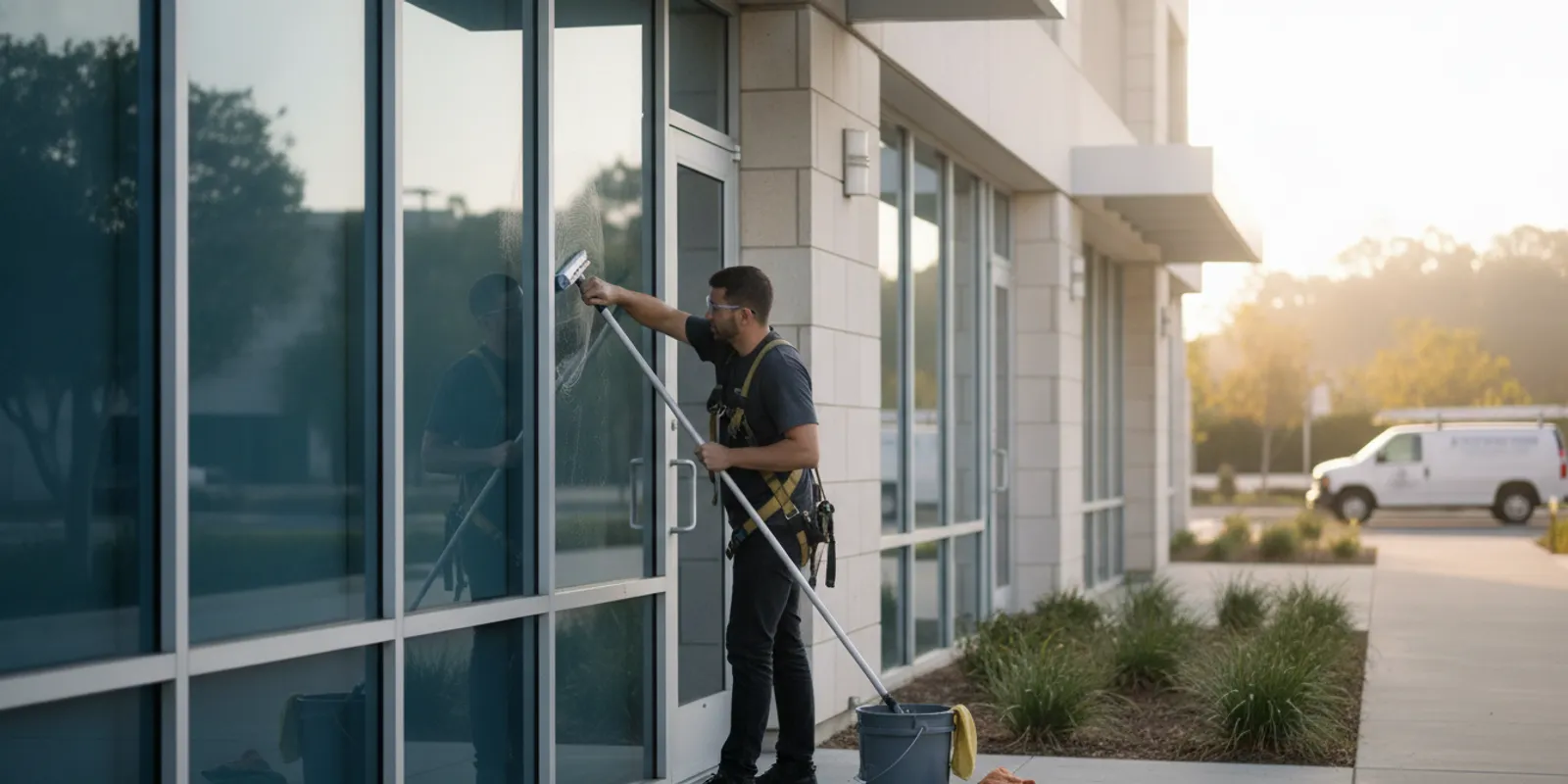
Ask which rooms and tasks are included, what is excluded, and which items require separate approval. If one proposal says “restroom cleaning” and another lists fixtures, floors, mirrors, and supply handling individually, ask for the same level of detail before comparing them. Confirm whether floor care, carpet cleaning, window washing, bathroom detailing, or day porter coverage is part of the quoted scope, an optional service, or a separate project.
Compare schedules and access assumptions
Check service days, time windows, anticipated access, and the treatment of periodic work. A proposal that assumes after-hours access is not directly comparable with one planned around daytime access. Confirm how keys or alarm procedures are handled, who is permitted into restricted areas, and how a requested change is submitted. Do not infer that a date is confirmed just because it was discussed; company terms state that a request becomes a booking only after acceptance.
Compare communication and quality follow-up
Ask who receives questions, how a missed task is reported, and how recurring concerns are tracked. Golden Coast describes direct client-to-owner communication and recurring supervisor quality checks. For your particular account, ask what is checked, how concerns are documented, and how a correction is communicated. Treat those details as items to confirm for the proposed scope; do not assume an unlisted response time or a guaranteed outcome.
Comparison point | What to record | Question to ask |
Scope | Rooms, tasks, exclusions, optional work | Which items are included in the recurring plan? |
Frequency | Visit days and periodic task intervals | How will the schedule be adjusted if use changes? |
Access | Keys, alarms, escorts, restricted spaces | What access assumptions are built into this proposal? |
Follow-up | Contact person and issue-reporting steps | How are concerns recorded and reviewed? |
Commercial terms | Quote basis, payment terms, booking confirmation | What step confirms a start date or change? |
Use the table as a shared comparison sheet, not as a scoring system that hides important differences. If a proposal is cheaper, look for differences in visit frequency, covered rooms, exclusions, or separately priced periodic tasks. If another proposal is more detailed, ask whether the additional lines represent added work or simply clearer descriptions. The aim is to compare equivalent requirements before deciding whether an optional service is worth discussing.
Read the commercial terms as carefully as the task list. Ask what information the quote assumes about site conditions and requested work, when payment terms are provided, how cancellations or schedule changes are handled, and what makes a request an accepted booking. Do not treat a quote request or verbal discussion as confirmation of service. Keep the written proposal, approved changes, and the current checklist together so the decision record is easy to revisit.
How should you plan for special facility requirements?
Some buildings need rules beyond a standard office checklist. A science laboratory manager should identify approved access windows, surface-care requirements, and the boundary between routine janitorial work and regulated materials. Golden Coast describes lab sweep-and-mop service for ordinary dust and debris and nonhazardous trash within approved access windows. Hazardous, biological, chemical, radioactive, sharps, and other regulated waste must remain under the facility's environmental health and safety program or appropriately qualified contractors. Routine janitorial work should not be treated as certified cleanroom or hazardous-material service.
For medical facilities, schools, and daycares, managers should describe the actual rooms, operating hours, access rules, and requested tasks. Confirm internal policies and applicable requirements before authorizing work. Do not assume a provider has a regulated infection-control credential, uses a particular product, or performs a specialized procedure unless that point is verified and included in the agreed scope. A careful checklist states what is requested while leaving compliance decisions with the organization responsible for the facility.
For laboratory planning, the U.S. Occupational Safety and Health Administration explains employer duties related to workplace hazard assessment and appropriate information and training under its Hazard Communication Standard. See OSHA's Hazard Communication Standard information. Use this as a reminder to coordinate hazards and access procedures with the facility's safety program; it does not establish that routine cleaners handle regulated materials.
What should the written proposal make clear?
Read the proposal beside your checklist. For each room, find the task, frequency, access condition, and any stated exclusion. Mark gaps rather than filling them with assumptions. For example, if the proposal names “common areas” but your list includes a reception lobby, two corridors, and a shared kitchenette, ask which of those spaces are included. If it names a task without a frequency, ask whether it is every visit or periodic.
Ask for plain-language definitions of flexible phrases. “As needed” should identify who observes the need and how additional work is authorized. “Periodic” should have a cycle or a process for setting one. “Supplies included” should identify which supplies and whose responsibility they are. If an item depends on access, a special finish, or an empty room, state that condition so the provider can explain whether the task can be performed as requested.
Consider a worked comparison. Provider A lists three service visits each week and names restrooms, shared spaces, and waste handling, but leaves periodic floor work outside the recurring plan. Provider B proposes fewer visits but includes a scheduled floor-care project. Neither is automatically the better fit. If the building's primary concern is daily use of common areas, the manager should ask how the different visit pattern affects those needs. If floor appearance is the priority, clarify the timing and scope of the separate project. Compare both offers against the same priority list, and ask for any revised proposal in writing.
Also identify who can approve an addition and how it affects the quote. A new tenant, construction activity, or change in operating hours can alter the workload. Discuss the change before it becomes an assumed addition to the checklist. Company terms say accurate site, access, and scope information matters, changes should be raised in advance, and unsafe work may be refused. Clear disclosure protects the planning process and gives the provider a chance to assess the request.
How can you keep the checklist useful after service begins?
Keep one current version of the agreed scope. Use it during check-ins and when reporting a concern. Record the location, date, task, and expected follow-up rather than sending a general note that “the office was missed.” A specific report gives both parties a starting point to determine whether there was a one-time access issue, an unclear instruction, or a recurring mismatch between the plan and the building's needs.
Review the list when occupancy changes, a department moves, a tenant adds a restriction, or a new area opens. For example, if a company converts a quiet office into a shared training room, note the new use and meeting schedule, then ask whether the current service days still fit. Do not assume that an informal change automatically updates the service plan. Confirm any new task, schedule, or quote in the agreed process.
Keep periodic and project work visible. A manager can maintain a separate “to discuss” list for carpet care, window washing, floor projects, or a future move. When one becomes a priority, describe the area, timing, access, and desired result; request a scope and quote before authorizing it. This avoids confusing a one-time request with routine work and helps the manager plan around building operations.
Golden Coast's commercial cleaning services overview describes broader service categories that may be discussed for a building. Use it to prepare questions, not to assume that every listed option belongs in a standard recurring plan. Keep the final checklist anchored to the written agreement for your site.
Frequently Asked Questions
How often should an office be cleaned?
There is no universal schedule. Occupancy, traffic, layout, and the agreed task list all matter. Review how each area is used, then discuss a frequency for each task during a walkthrough.
Should carpet or floor care be part of routine janitorial service?
Not automatically. Floor care and carpet cleaning may be separately scoped or scheduled periodically. Ask which work is included in recurring visits and how additional work is approved and quoted.
What should I bring to a walkthrough?
Bring an area list or floor plan, operating hours, access information, known restrictions, and your priorities for tasks and frequencies. Also identify who can approve a proposal or requested change.
Can ordinary cleaning staff handle laboratory waste?
Do not assume so. The documented lab scope covers ordinary dust, debris, and nonhazardous trash. Follow the facility's EHS program or use appropriately qualified contractors for regulated waste.
Schedule a walkthrough
A clear checklist helps facility managers define building needs and compare proposals on equal terms. Golden Coast Cleaning Services is an owner-led commercial janitorial provider serving Orange County, with tailored office-cleaning plans built around each building's needs and schedule. Bring your site brief, identify access limits, and ask for tasks and frequencies to be stated clearly.

Comments