
A Facility Manager's Guide to Church Cleaning Services Orange County
Choosing church cleaning services orange county requires planning for a building that may serve worship, classes, meetings, and community events in the same week. A clear cleaning plan should define rooms and timing, but it should also give staff a consistent way to document a hazard, service issue, or near miss. This guide focuses on practical facility coordination rather than a one-size-fits-all checklist.
Golden Coast Cleaning Services is an owner-led commercial janitorial and office-cleaning company serving Orange County, including Irvine and Huntington Beach. Jennifer Cho, Owner and Operator, works with clients on building-specific cleaning plans and schedules. For a church or other community facility, the useful starting point is a room list, an honest calendar, and a written path for reporting issues.
What should church cleaning services in Orange County cover?
Start by walking the building with someone who understands how each space is used. A sanctuary may need a different routine from a restroom or classroom. Note surfaces, access restrictions, furniture arrangements, and what “ready for use” means. Be specific: “remove ordinary debris from the assembly-room floor” is easier to confirm than “clean the church.”
- Worship and assembly areas:
Record floor types, seating layouts, surfaces within the agreed scope, and items that must not be moved.
- Entrances and corridors:
Note mats, routes from outside, and areas where soil tends to collect during busy gatherings.
- Restrooms:
Define fixture, mirror, counter, and floor care. Decide whether supply checks or replenishment are part of the requested work.
- Classrooms and meeting rooms:
Identify furniture, activity materials, and the expected room setup for the next group.
- Shared gathering areas:
Include fellowship spaces and other common areas according to use and priority.
Separate recurring janitorial tasks from periodic projects. Golden Coast documents commercial janitorial and office cleaning, bathroom detailing, floor care, carpet cleaning, window washing, and day porter service. A service menu is not a promised scope: list the tasks requested and confirm which are included, how often they occur, and who supplies any needed consumables.
How do you fit cleaning around services and events?
Build the schedule from actual use, not assumptions. List regular worship times, weekday programs, meetings, and seasonal events. For each room, record its next use and the available cleaning window. A high-use restroom might need attention more often than a meeting room reserved once a week. A major gathering may also require a separately agreed reset.
Keep a shared calendar of recurring reservations and known exceptions. Name who can approve schedule changes and how much notice the provider needs. Weddings, funerals, holiday programs, and community events can change room access or furniture layouts. Share those dates early, and do not assume that last-minute service or an event reset is included unless it is written into the scope.
If daytime support could help common areas, discuss day porter service in terms of hours, locations, and tasks. The phrase is not a standard package. Specify whether the need is a scheduled check, attention to routine soil, or separate event-related work. If availability or room access changes, document the revised arrangement so all parties are working from the same plan.
How often should each area be cleaned?
There is no universal frequency for every congregation. Consider how many people use a room, what activities take place, the interval between uses, and the time available for service. Reassess after a change in attendance, program hours, room assignments, or event volume. The table below is a planning comparison, not a preset schedule or service promise.
Area or task | Planning question | What to define |
Sanctuary | When is it occupied, and when must it be ready? | Routine floor and surface tasks; any event reset as a separate agreed item. |
Restrooms | How heavily are they used between visits? | Detailing cadence and whether daytime checks are needed. |
Classrooms | Which rooms are used daily or only on program days? | Visit timing, furniture expectations, and items staff should secure. |
Carpet and hard floors | Which surfaces need periodic attention beyond routine work? | Areas, timing, and scope for carpet cleaning or floor care. |
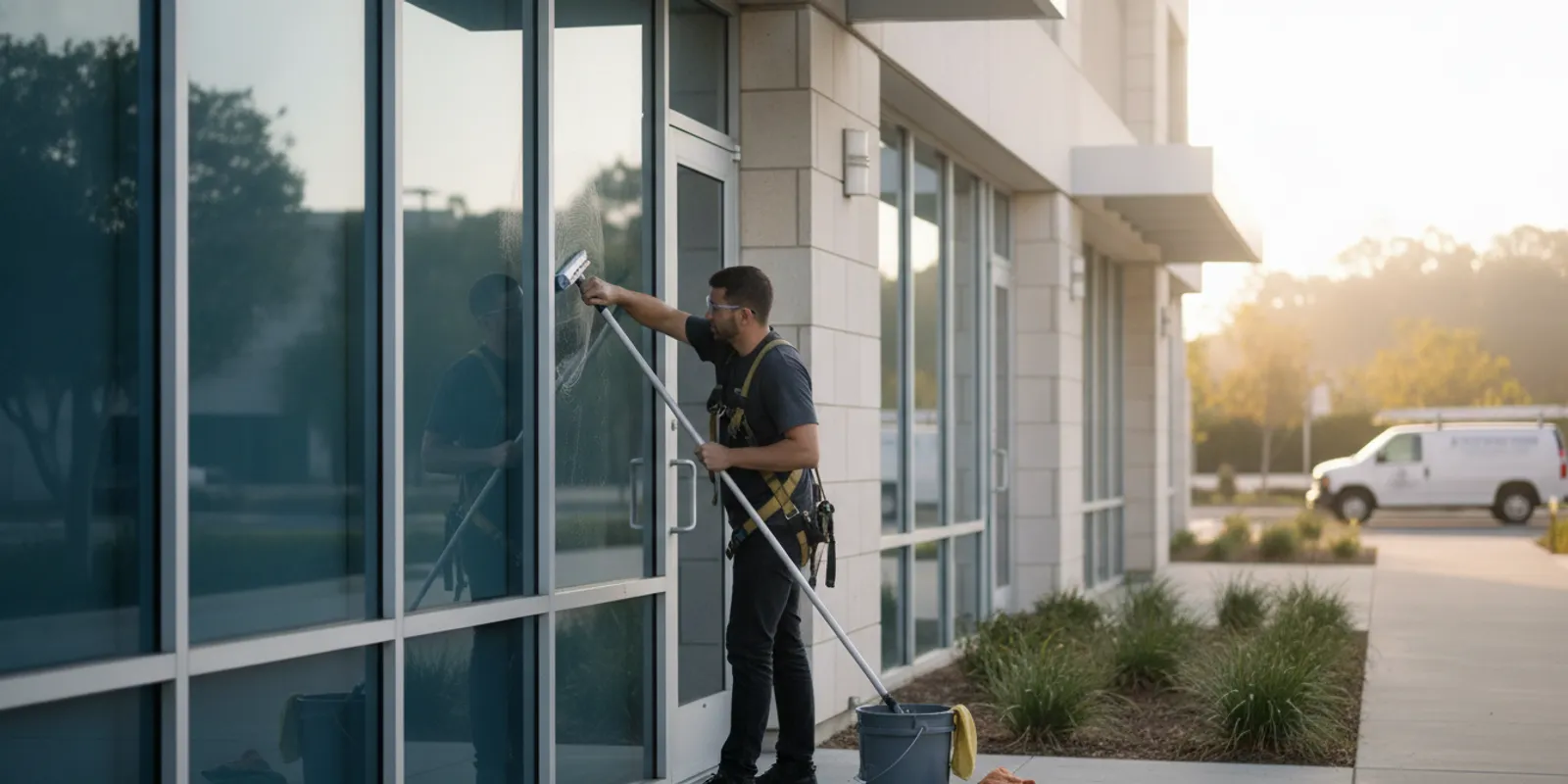
Windows | Which windows are in scope, and how often? | Access, included areas, and timing for window washing. |
Make priorities explicit if a visit has limited time. For example, a facility may identify restrooms and the main entrance as essential before a weekday program, while a less-used meeting room can follow a different cadence. That example is a decision framework, not a recommended frequency for every building. Golden Coast describes schedules from occasional visits to more frequent service, with scope and pricing based on requested work and site conditions. For general workplace safety context, the federal Occupational Safety and Health Administration explains employers’ responsibilities for workplace safety at OSHA’s worker safety resource. Facility managers should follow their own safety procedures and applicable requirements; a cleaning log is not a substitute.
What belongs in a commercial cleaning incident report?
A useful report records what was observed, what immediate step was taken, who was notified, and what follow-up remains. Keep the wording factual. The report should support the church’s safety and communication process, not replace internal incident forms, emergency response, or qualified assessment when those are needed.
- Date, time, and exact location.
Identify the room, entrance, corridor, fixture, or other area and when the condition was found.
- Observed condition.
Describe visible facts, such as a wet floor, damaged item, overflowing waste, blocked route, or missed task. Avoid guessing at cause or assigning blame.
- Immediate action.
State whether access was restricted, a warning marker was placed, a staff contact was informed, or another response was requested. Do not record an action as completed unless it was.
- Notification details.
Note the role or name of the person notified, the time, and any direction received. Follow the organization’s privacy rules.
- Follow-up owner and status.
Identify who is responsible for the next step and when the area or issue will be checked again.
- Supporting detail, if permitted.
Attach a photograph only when the church allows it and its privacy and recordkeeping rules are followed.
For example: “At 8:10 a.m., water was observed beside the west entrance mat before the morning program. The area was kept clear and the facilities contact was notified at 8:14 a.m. Follow-up was assigned to that contact.” This separates observation, response, and ownership. “Entrance unsafe” is too vague to establish what was seen or what remains to be done.
How should staff respond to different report types?
Not every note is an emergency, and not every issue belongs in a routine cleaning log. The facility should define its own escalation path and ensure staff know who receives urgent concerns. A simple triage distinction can help:
- Routine service observation:
A missed agreed task or a recurring buildup can go to the designated facilities contact for discussion and scope review.
- Immediate hazard:
Follow the church’s safety procedure, restrict access when appropriate, notify the responsible person, and use emergency or specialist help where required.
- Injury, allegation, or security concern:
Use the organization’s designated reporting and privacy process rather than placing sensitive details in a general cleaning log.
Do not ask a general janitorial team to address hazardous spills, damaged electrical equipment, or regulated waste unless qualifications and scope have been expressly confirmed. A report can document that a concern was observed and routed; it should not imply a specialized remedy was performed. Keep personal details limited to what the organization’s process requires.
How can repeated reports improve the cleaning plan?
Review notes periodically for patterns. If the same entrance is often affected after rainy gatherings, discuss whether mat placement, inspection timing, or the agreed cleaning window needs adjustment. If a classroom is repeatedly left with materials on the floor, clarify what staff should secure and what cleaners are expected to address. A pattern is a reason to investigate the plan, not proof of fault.
Use a short review with three questions: Is the location accurately described? Is the task already in the written scope? Does the schedule still match how the room is used? If the answer to the second question is no, decide whether to revise the scope rather than treating the extra task as an assumed part of routine work. Record approved changes and the date they take effect.
Close the loop with the person who raised the issue when appropriate. A report should not disappear into a folder: note whether the concern was addressed, assigned to another party, or remains open. Keep records in the organization’s approved location and avoid including sensitive personal information in a shared service log.
What should a facility walkthrough establish?
A walkthrough turns broad expectations into a plan that can be checked. Bring room names, a calendar, access instructions, and a list of surfaces or items requiring special care. Identify off-limits spaces and rooms that may only be entered with an authorized staff member present.
- List included rooms.
Walk the sanctuary, offices, classrooms, restrooms, halls, and gathering areas; mark exclusions clearly.
- Describe the result.
Explain what “ready for use” means in each room, including whether furniture or equipment should remain in place.
- Set priorities.
Distinguish high-use tasks from periodic projects and note what should be addressed first when time is limited.
- Confirm timing and access.
Cover entry points, keys or alarms, event conflicts, and who communicates changes.
- Record boundaries.
Note fragile items, restricted areas, facility-approved methods, and tasks outside the requested service.
- Agree on communication.
Identify the church contact and how routine observations and urgent reports should be sent.
Review the company’s cleaning services overview for its documented service categories. The contact page is available for questions about a site-specific estimate. A request is not a confirmed booking until accepted, and pricing depends on disclosed site conditions and requested work.
How do you keep the scope clear after service begins?
Write recurring tasks in plain language. Specify rooms, surfaces, and frequency. Separate regular janitorial work from occasional floor care, carpet cleaning, window washing, move-in or move-out work, or construction cleanup. For an event-dependent task, state who can authorize it and how much notice is expected. Ask for a written description rather than relying on vague terms such as “deep clean” or “event cleanup.”
Keep a current copy of the approved task list and change record. When opening hours, room use, or event frequency shifts, review whether the schedule still fits. Staff should know who owns the service relationship, who can approve changes, and how to report a problem. A concise log supports that conversation, but does not replace the agreed scope or the church’s own safety procedures.
Frequently Asked Questions
Can church cleaning be scheduled around worship?
Yes. Share worship times, weekday programs, and event dates during planning, then confirm cleaning windows and how changes will be communicated.
Does a church need daily cleaning?
Not necessarily. Frequency depends on occupancy, room use, priorities, and time between gatherings. A walkthrough can help distinguish high-use rooms from spaces needing less frequent attention.
Can floor, carpet, or window care be included?
Golden Coast lists commercial floor care, carpet cleaning, and window washing. Ask for each task’s areas, timing, and scope rather than assuming it is part of routine janitorial work.
What should staff do with an urgent hazard?
Follow the organization’s safety and emergency procedures, notify the designated responsible person, and seek qualified help when needed. A routine cleaning report is not a substitute for that response.
How is the price determined?
The company does not publish a universal rate. Pricing depends on requested work and disclosed site conditions, so an estimate requires details about the building, scope, and schedule.
A room list, calendar, reporting path, and clear priorities give church leaders and cleaning providers a practical shared plan that can be reviewed as facility needs change.

Comments