
Move-In and Move-Out Cleaning Services for Commercial Properties
Commercial move-ins and move-outs involve more than an empty room. A clear plan for move in move out cleaning services helps property and facility managers coordinate access, define who handles each area, and finish the work before the next inspection or occupancy date. The right scope depends on the building, its condition, and the handoff requirements.
Why should cleaning be planned around the handoff?
A commercial handoff is a sequence of tasks, not just a date on a calendar. A departing tenant may still be removing furniture while the property team checks fixtures, arranges repairs, or prepares access for a new occupant. Cleaning too early can mean repeating work. Cleaning too late can leave little time to review the space and address missed items.
Start by identifying the actual handoff milestone. It might be the tenant's last day, a landlord inspection, a contractor's release of an area, or the date the incoming occupant receives access. These events are not always the same. Build the cleaning window around when rooms are accessible and can be inspected, rather than assuming that a lease end date alone determines the schedule.
For a multi-suite property, treat each area as its own handoff zone. A vacant suite may be ready while a corridor, shared restroom, elevator lobby, or loading area is still in use. A phased plan lets the property team confirm which spaces are available and helps prevent completed areas from being disturbed by later move activity.
What should you confirm before setting a cleaning date?
Before requesting a quote or scheduling work, collect the information that can change the scope or available work window. A site review can make the plan more specific and surface access questions early. Golden Coast Cleaning Services provides commercial janitorial and specialty cleaning, including move-in/move-out cleaning; the appropriate work and schedule depend on the building and agreed scope. Learn more about commercial cleaning services or contact the company to discuss a walkthrough.
- Occupancy and access:
Confirm when the suite will be empty, whether movers or contractors will still be working, and who can provide keys, badges, or entry instructions.
- Areas included:
List the rooms and shared spaces in scope. Clarify whether cleaning covers a tenant suite only or common areas as well.
- Current condition:
Note visible dust, tracked-in soil, spills, residue, or other conditions that may need an on-site review before the scope is finalized.
- Floor types:
Identify carpet, resilient flooring, tile, or other surfaces. Select floor care for the actual material and requested result.
- Restroom and kitchen access:
Confirm which facilities are part of the turnover and whether utilities and water will be available.
- Building rules:
Share permitted service hours, sign-in procedures, loading instructions, elevator rules, and areas that must remain clear.
- Handoff expectations:
Gather the property checklist or incoming occupant's stated requirements, if one exists, and identify who will inspect the finished space.
Do not assume a cleaning team can dispose of abandoned furniture, construction debris, hazardous materials, or tenant property as part of ordinary cleaning. Identify anything that needs separate handling and assign it to the appropriate party before the cleaning window. A clearly bounded scope avoids confusion about what is included.
When should move-out cleaning happen?
For move-out work, the most useful timing is generally after belongings and moving activity have cleared the areas to be cleaned. That gives the team access to surfaces that were previously blocked and reduces the chance that clean floors or fixtures will be soiled again. The exact sequence depends on the building's turnover plan, repairs, and availability.
Ask the tenant, property representative, and contractors to identify their final access times. If repairs or touch-ups are planned after cleaning, decide whether to work in stages: an initial pass after the space is cleared, followed by a limited final clean after repair work. If the work is done in one visit, agree on which activities must be finished first.
Allow time for more than the cleaning itself. The property manager may need to unlock rooms, explain site rules, walk the space, and review completed areas. A narrow window that leaves no time for a final check can turn a manageable issue into a difficult handoff. Confirm the order of work and the person who will accept the finished space.
Work backward from the handoff date. First, set the latest time the suite can be released; then account for furniture removal, repairs, cleaning, and inspection in that order. This is a coordination framework, not a fixed number of days: lead time depends on the building, amount of work, and availability of each party. If the handoff date is firm, identify which tasks are essential for initial occupancy and which can be scheduled separately.
When should move-in cleaning happen?
For move-in preparation, schedule cleaning after the space is released for the work and before furniture, equipment, or supplies make surfaces harder to reach. If incoming occupants need early access to stage items, separate that access from the cleaning period when possible. Coordinate with the property team so the cleaner is not working around active deliveries or installation crews.
Consider whether the suite needs an initial clean before setup, a later touch-up after installation, or both. The answer depends on the building's condition and sequence of work. Confirm access, scope, and other trades before agreeing on a plan. For occupied buildings, establish how people will move through adjacent areas during service. Provide a route for movers and staff that avoids wet or recently cleaned surfaces.
If several suites are being handed over, use a room-by-room or floor-by-floor plan and confirm the release of each zone. For example, a property manager might release the east wing first while contractors finish a repair in the west wing. The manager can label the first wing ready, keep the second wing unavailable, and agree on a separate time to review the completed zone. That is more actionable than asking a team to clean the whole building while access remains uncertain.
Which handoff areas should be included?
Begin with the suite boundary and write down what is inside it. Then decide whether shared areas are included under the tenant's turnover, the building's routine cleaning, or another arrangement. Responsibility varies from property to property, so a written scope is more useful than assumptions.
Area or task group | Move-out planning point | Move-in planning point |
Office and meeting rooms | Confirm furniture and personal items are removed; list rooms needing access. | Clean before furnishings and equipment are placed where possible; identify restricted rooms. |
Floors and carpet | Identify floor materials, visible soil, and requested floor or carpet work. | Complete agreed work before deliveries; plan routes to protect finished areas. |
Bathrooms | List included restrooms and confirm access and water. | Include a final check before occupancy and clarify shared restroom responsibility. |
Kitchen or break area | Specify surfaces and fixtures; distinguish cleaning from item removal. | Make the area available before supplies or equipment are installed, if practical. |
Entry and shared spaces | Decide whether corridors or lobbies belong to the suite turnover or building plan. | Coordinate service windows with people and deliveries. |
Final review | Assign an inspector and record follow-up items. | Verify the agreed scope before occupants use the space. |
The table is a planning aid, not a universal checklist. A building might include a shared restroom in its recurring janitorial plan rather than in an individual tenant turnover. Document the decision so the outgoing and incoming parties know which work is included and who will confirm it.
When several parties use different names for the same space, add a room number or another identifying detail. “Back office” may mean one room to a tenant and another to building staff. A suite number, floor-plan label, or brief location note keeps the scope unambiguous. Include areas intentionally excluded, too. A locked equipment room should be identified as unavailable rather than overlooked.
How should floors be handled?
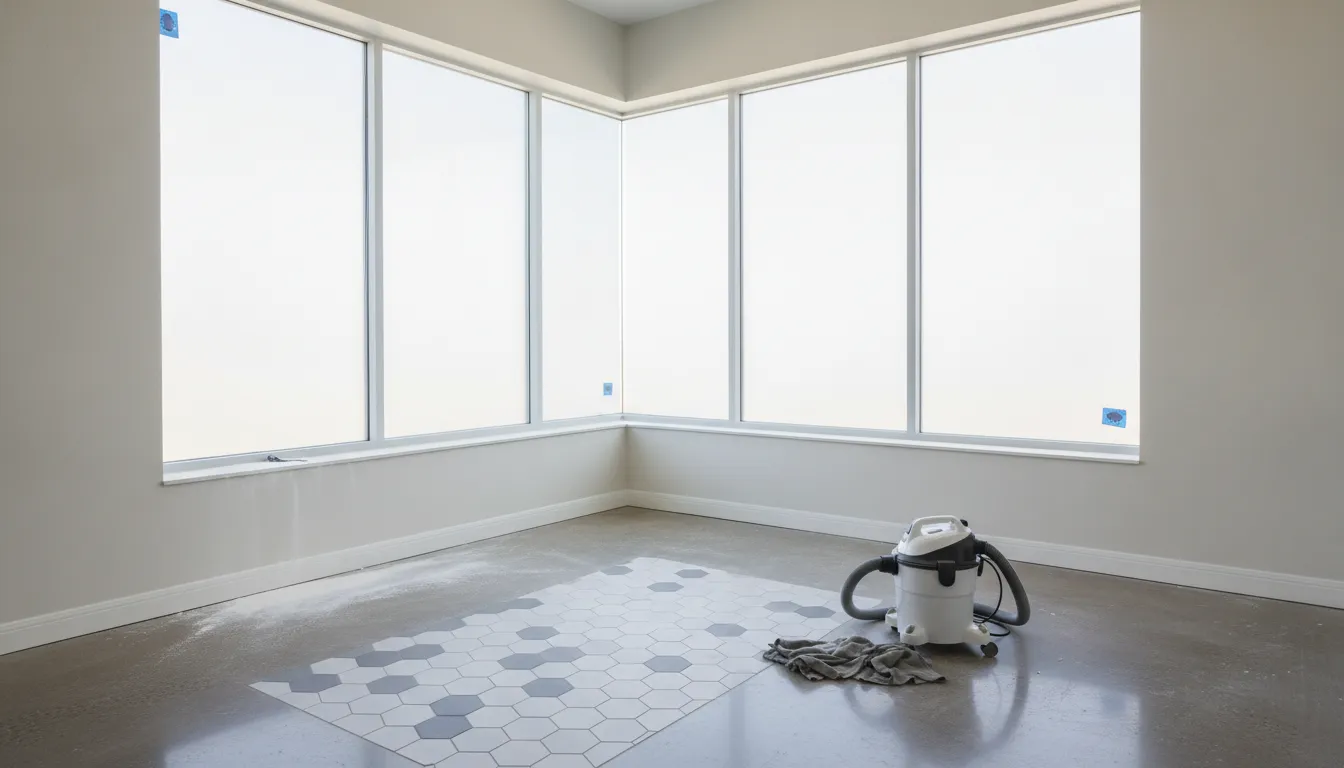
Floors often shape the scope because materials and condition vary from room to room. Identify each floor type instead of describing the entire property as having one generic floor-cleaning need. Note carpeted offices separately from hard-surface corridors, tiled restrooms, or a finished lobby floor. If you are uncertain about a material, ask for it to be reviewed rather than choosing a treatment by guesswork.
For carpet, state whether the request is for routine vacuuming or a separate carpet-cleaning service. Share the areas involved and visible concerns that should be assessed. For hard floors, describe the surface and requested work, such as routine cleaning or other floor care. Do not assume move-out cleaning automatically includes restorative work, stripping, refinishing, or every specialized treatment.
Coordinate floor work with traffic. Movers, contractors, and inspectors can cross freshly cleaned areas, so agree on the sequence and provide a route around completed zones. If a surface needs time before normal use, the site manager should communicate that based on the actual service and conditions.
What belongs in a bathroom and kitchen handoff?
Bathrooms and break areas deserve their own scope because access, fixtures, and responsibilities differ from those in office rooms. List each restroom included, including shared facilities if relevant. Confirm the area will be accessible and utilities needed for cleaning are available. Ask the property representative to point out any fixture or surface needing special attention.
For a kitchen or break area, state whether the scope covers surfaces and fixtures or only general room cleaning. Separate cleaning from emptying refrigerators, removing abandoned food, discarding tenant property, or hauling equipment. Those are not safe assumptions for a cleaning scope. Determine who will clear items and when the area will be ready.
A final review should look at the agreed surfaces, not undefined expectations. If the handoff form calls for particular areas or fixtures, use that form as the review reference. Record an item needing follow-up with its location and a clear description.
How can property teams coordinate access and responsibility?
Choose one point of contact for the cleaning plan and make sure that person can coordinate with the outgoing tenant, building staff, and incoming occupant. Provide access instructions in advance, including where to check in and which spaces are off limits. If keys or badges are temporary, explain when and how they should be returned.
Keep a simple responsibility list. It can include who removes furniture, who arranges repair work, who confirms utilities, who requests cleaning, and who signs off on the handoff. This is especially useful when the landlord, tenant, and incoming occupant each manage different parts of the process.
Set a change-notification method. If a move runs late or a repair blocks access, the site contact should tell the cleaning provider which room is affected and whether the overall window has changed. A room-specific update makes it easier to decide whether another zone can proceed or the visit should be rescheduled. Confirm revised scope or timing with the responsible contact before treating it as agreed.
For larger properties, mark zones on a floor plan or use a short room list with status labels such as ready, in progress, or unavailable. Share the same version with building staff and the cleaning contact. This can help prevent someone unlocking an occupied room or sending movers through a completed area. It also gives the final reviewer a clear route through the space.
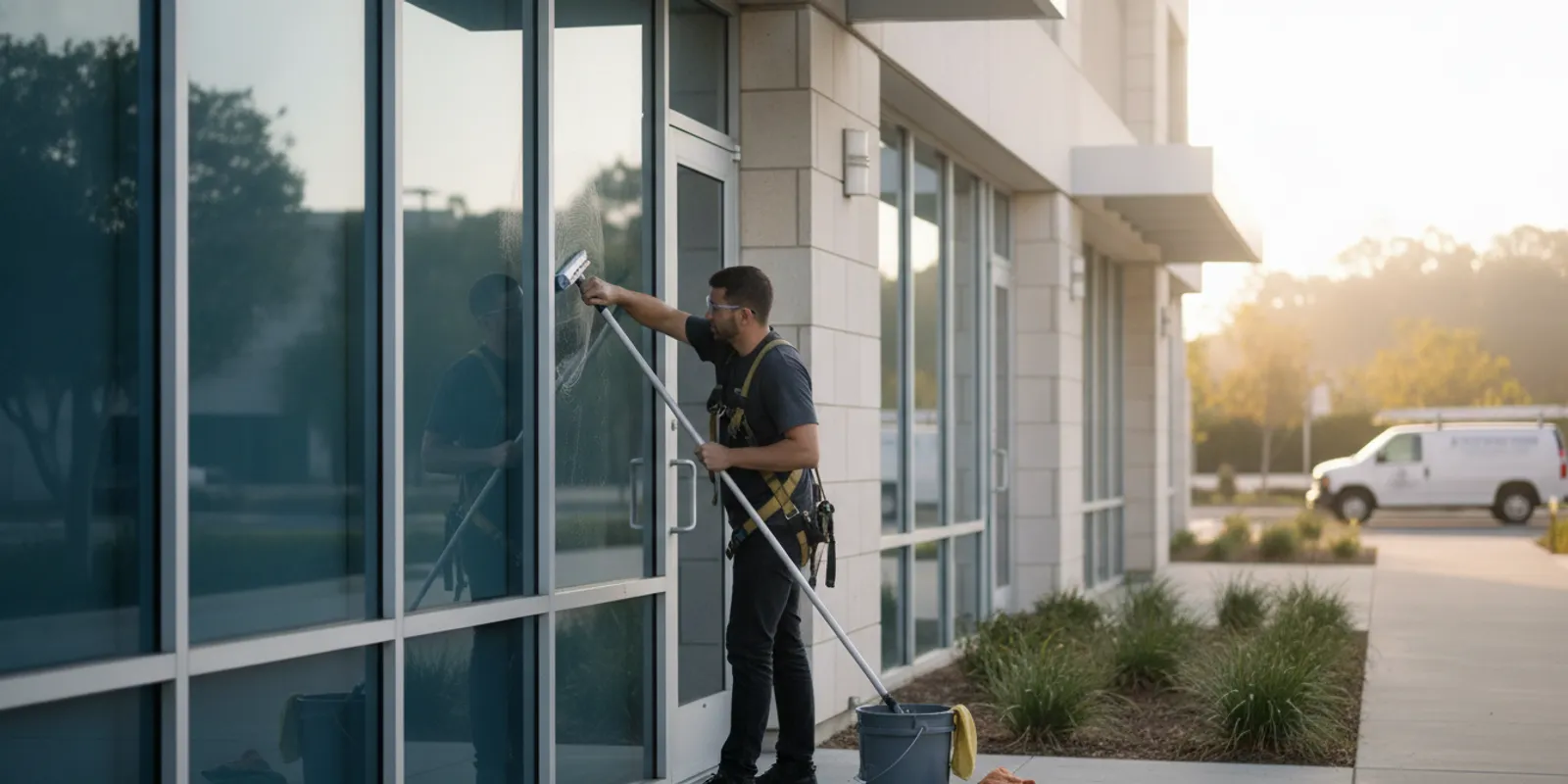
For ongoing janitorial arrangements, treat a one-time turnover as a distinct scope unless the parties have agreed otherwise. A property team can ask about move-in/move-out cleaning, recurring office cleaning, floor care, carpet cleaning, or window washing as separate needs. Direct communication and a tailored plan help keep the request aligned with the building and schedule.
What should you check before accepting the space?
Use a final walk-through to compare completed work with the agreed scope. The goal is not to apply an unstated standard after the fact. It is to verify listed rooms and tasks, identify any missed item promptly, and record the handoff condition.
Walk every room included in the plan, including closets or small spaces if they were in scope.
Check agreed floor and carpet areas for visible debris or a missed section, taking the surface and requested service into account.
Review the listed bathroom and break-area surfaces and fixtures.
Confirm restricted areas or excluded items were left as agreed.
Note areas disturbed by later repairs, deliveries, or moving activity so they are not confused with completed cleaning.
Write down specific follow-up items, who will handle them, and the next step.
Photographs can help document a handoff when permitted by property policy. Keep records focused on the relevant condition and protect tenant or occupant privacy. If the property uses a formal inspection sheet, attach the cleaning review to that process rather than creating a second, conflicting checklist.
Make the final review practical: use the same route and room names as the scope, note the inspection time, and distinguish a cleaning follow-up from damage, repair work, or activity after cleaning. If an item needs attention, record its precise location and describe what was observed without assumptions about cause. Share the note with the person responsible, then close it out when the parties agree that the handoff requirement has been addressed.
What mistakes make turnovers harder?
Scheduling before the suite is released: A team cannot clean effectively around furniture removal or active work. Confirm the release time and plan for changes.
Leaving shared spaces undefined: A suite may be clean while parties disagree about a corridor or restroom. List each included common area and who owns its cleaning.
Using a vague request: “Clean the whole space” does not explain which rooms, floor types, or handoff checks are expected. Provide a room list and condition notes.
Combining unlike tasks: Routine cleaning, carpet cleaning, floor care, and construction cleanup may require different scopes. State which services are requested rather than assuming all are part of one visit.
Skipping the final review: If nobody is assigned to inspect completed areas, there may be no clear route to resolve a missed item. Name the reviewer and allow a practical review window.
What should you bring to a cleaning walkthrough?
A walkthrough is most useful when the property representative can show the areas and describe the handoff. Bring a floor plan or room list if available, the relevant turnover checklist, access instructions, and a proposed service window. Identify other contractor work that may affect timing, along with spaces that cannot be entered.
Be ready to discuss whether the need is a one-time move-out or move-in project, recurring janitorial service, or a combination of separate services. Explain the preferred schedule and what the property needs to verify before the next occupant arrives. A site review can help establish a tailored scope; the actual plan should reflect building conditions and available access.
For cleaning involving chemicals, work practices and site communication matter. OSHA provides general workplace safety information at the Occupational Safety and Health Administration website; facility teams should follow applicable requirements and building procedures for their own operations.
Frequently Asked Questions
Should cleaning happen before or after repairs?
It depends on the sequence and whether repair work will create dust or disturb cleaned surfaces. Confirm which work must be completed first. If repairs follow the main cleaning, ask whether a limited final pass is appropriate and include that expectation in the scope.
Does move-out cleaning include carpet cleaning?
Not automatically. Identify carpeted areas and state whether you are requesting carpet cleaning in addition to the agreed general cleaning. The scope should reflect the carpet's condition and the work requested.
Who should inspect the space?
The property manager or another person designated by the property team should compare finished areas with the agreed checklist. If the tenant or incoming occupant also needs to review the handoff, coordinate that review and clarify who records follow-up items.
Can cleaning happen while movers are still working?
Separate, released zones may be handled, but active moving can restrict access and disturb completed work. Confirm which rooms are available and create a phased sequence if the site cannot be cleared all at once.
How do we define a successful final handoff?
Agree on included areas, requested tasks, access window, and reviewer before work begins. At the end, check those items, document specific exceptions, and assign follow-up action. A shared scope gives each party a practical reference for the transition.
A well-coordinated turnover begins with a clear scope and ends with a documented review. Golden Coast Cleaning Services can discuss commercial move-in or move-out cleaning needs in Orange County and help plan a walkthrough around the building's requirements.

Comments